


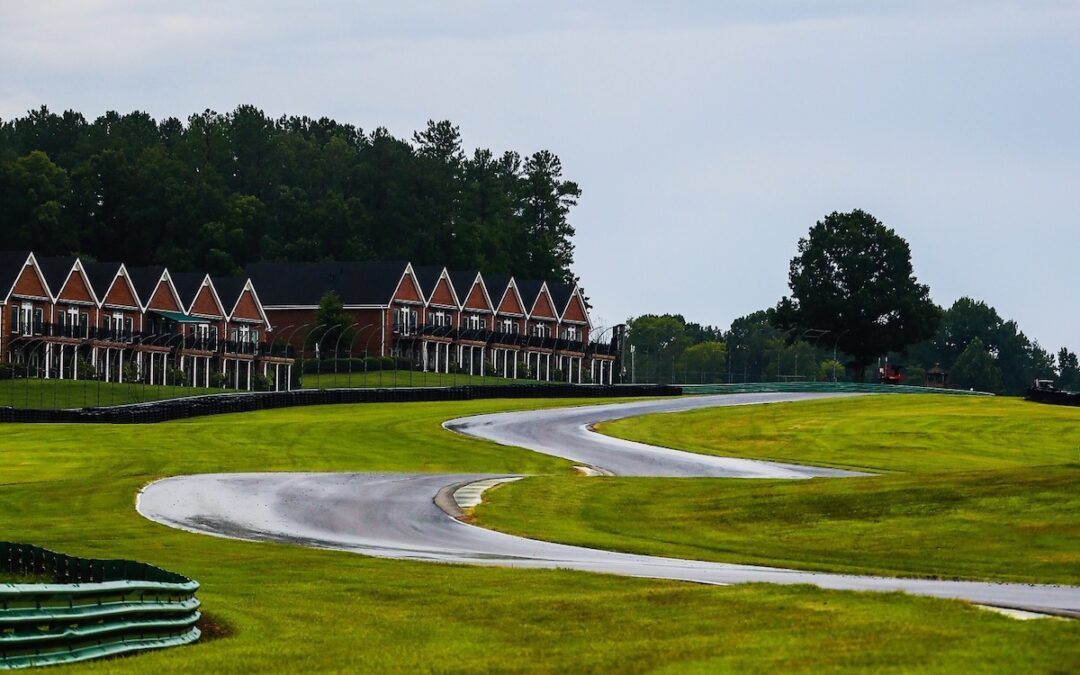
Over the next several weeks, I’ll be at Virginia International Raceway quite a bit. I’m lucky enough to call VIR my home track, and it’s a great time of year to spend so much time there, with the spring season in full swing.
I work with many drivers at VIR, and I’ve found that we always come back to a couple of key takeaways that are specific to the track. VIR is filled with many nuances: its long straightaways as well as lots of corners over rolling hills create many challenges.
In VIR’s corner combinations, where one corner leads into the next, it’s imperative to have specific car placement for the first corner to help optimize the next corner. Many of these are corners that go in opposite directions, so coming to terms with compromising the exit of one corner to optimize the next is a very common theme.
I’ve found that it takes a lot of discipline to have that good car placement, because it’s so tempting to go as fast as possible through the first corner, only for it to negatively affect you in the next. When that compromise is executed properly, it rewards a driver tremendously and achieves a faster lap time.
VIR has four sections of the circuit that are specific to compromising one corner to optimize the next. This skill set can really pay dividends over the course of a lap, especially since it affects performance in four different sections of the racetrack.
Another common trend I see with drivers at VIR is specific to the turn 11-12 combination. It’s historically known as Oak Tree Turn, though sadly the oak tree is no longer at the apex of turn 12. The elevation of this particular part of the track is steeply uphill heading toward turn 11 before you dissipate a bit more speed to turn through 12, which leads onto the very long back straightaway.
Although we consider this a combination corner, it’s not like the sections I previously mentioned that go in opposite directions. The corners are both right-handers. Because of the uphill topography, the amount of momentum a driver is able to carry into 11 is often greatly underestimated. A driver can carry a lot more momentum up the hill through turn 11 than one would initially think, which also gives the car a better position and balance for turn 12, which is critical since it leads onto the longest straightaway on the track.
VIR has a number of nuances to its historic 3.25-mile layout, and these are some of the most common themes that I find that, when done correctly, can really separate a driver from the rest of the pack.