


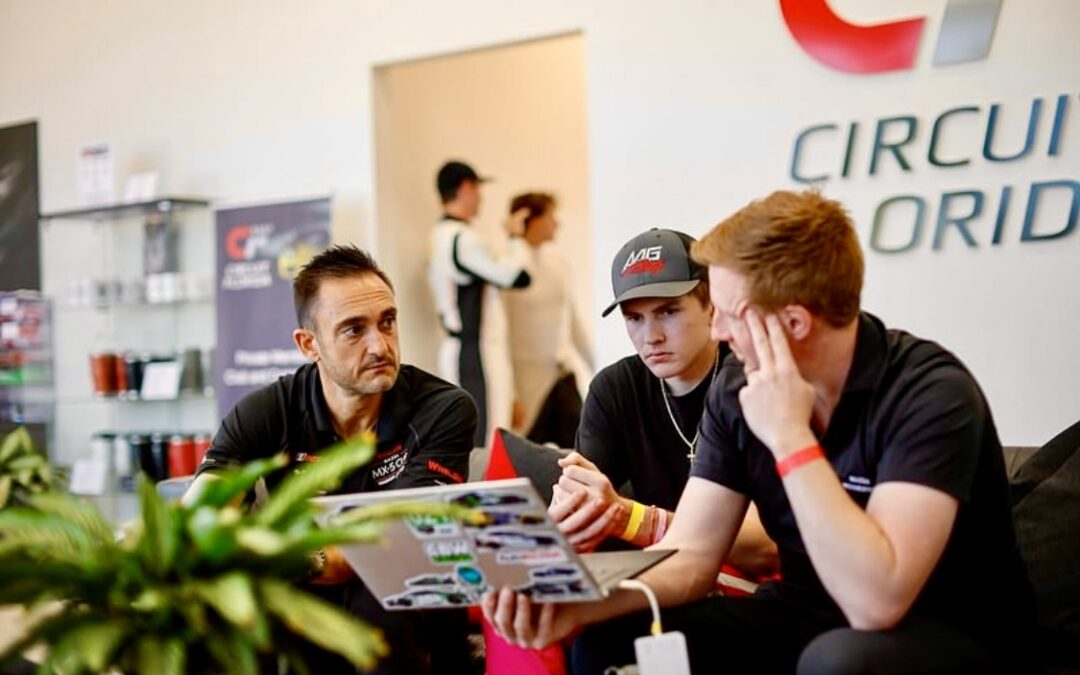
Last week was the annual Mazda Shootout, and something that all the drivers had to do was exercise their ability to learn a new track quickly. That’s because the Shootout was hosted at the brand-new Circuit Florida, and there isn’t even sim racing available for it yet. And, due to the compact nature of the Shootout schedule, the drivers only had a few sessions to learn the track and represent what they were capable of.
That got me thinking about how to learn a brand-new track quickly, efficiently, and safely.
The first thing is to identify where the opportunities for extracting the most lap time out of the track are. At Circuit Florida, that included the many big-braking areas throughout the track. Some were very straightforward—as in literally a straight line—while others had some nuance since they curved right where you were at the braking limit.
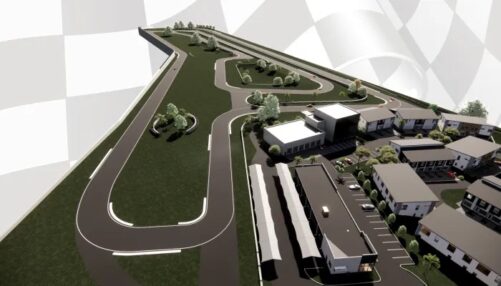
A look at Circuit Florida’s layout.
The reason these braking zones are some of the biggest opportunities to start with is that carrying maximum speed for that much longer—even just a car length—can make a big difference when it’s done several times a lap.
Next, we want to identify which corners lead onto the longest straightaways, so you can focus on optimizing your exit from those particular corners. That way, as you head into the longest straights, you have the longest time over distance to gain one extra mile an hour carried into the next straightaway. It doesn’t sound like much, but it can certainly add up across several straightaways throughout a lap.
If you’re a newer driver, this strategy should be your first priority in trying to find more lap time. Carrying more speed off a corner onto a long straightaway is always going to give you a performance gain, and it leaves the trickier, later-braking strategy as something to tackle as you gain more experience.
Lastly, it’s important to identify where you can carry momentum through a series of corners. In the case of this track, it was a chicane followed by a double left-hander. This required figuring out proper gearing and the ideal line for the most momentum to be carried, which would net maximum gains.
All three of these components are important in putting a competitive lap together, and it’s up to you to determine what suits not only your driving experience best, but also your comfort level in what you want to approach first. As we’ve seen, late braking can always have a big advantage for gains and even overtaking in a racing scenario, but it also has the maximum amount of risk involved.
Ultimately, it’s important to remember the fundamentals, maximizing speed out of a corner and trying to keep minimum speed up.
It was fun to watch all the drivers at the Shootout adapt so quickly to this new circuit. It certainly raised the bar in terms of how well-rounded the drivers needed to be throughout the event.